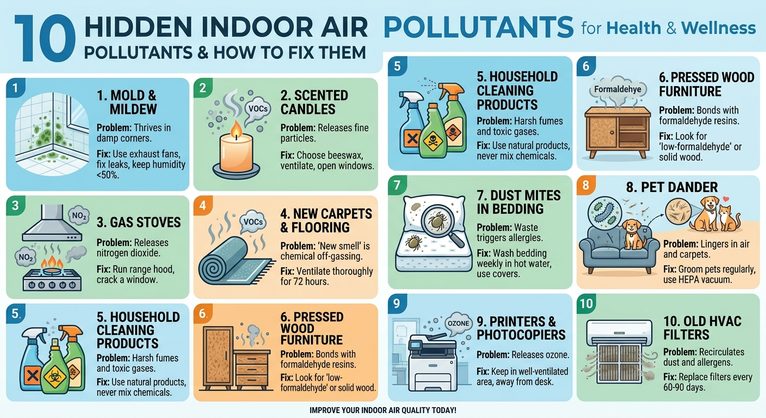
When we think of air pollution, we usually picture smoky factories or traffic-choked streets. But here’s something most homeowners never consider: the air inside your home can be 2 to 5 times more polluted than the air outside. The culprits are often everyday items you’d never suspect.
Here are 10 hidden sources of indoor air pollution — and simple ways to deal with each one.
1. Mold and Mildew in Damp Corners
Bathrooms, basements, and areas around leaky pipes are prime breeding grounds for mold. Mold spores are released into the air and can trigger allergies, asthma, and respiratory irritation, often without any visible warning sign until the growth is significant.
Fix: Use exhaust fans in bathrooms, fix leaks promptly, and keep indoor humidity below 50%. A dehumidifier works wonders in damp climates.
2. Scented Candles and Air Fresheners
Ironically, the products we use to make our homes smell fresh can be major pollutants. Many candles and sprays release volatile organic compounds (VOCs) and fine particulate matter when burned or sprayed.
Fix: Choose beeswax or soy candles with cotton wicks, and ventilate the room when using any fragranced product. Better yet, open a window and let in real fresh air.
3. Gas Stoves and Cooktops
Cooking on a gas stove releases nitrogen dioxide, carbon monoxide, and formaldehyde — especially when the range hood isn’t used. Over time, this can significantly degrade kitchen air quality.
Fix: Always run your range hood or exhaust fan while cooking, and crack a window if possible.
4. New Carpets and Flooring
That “new carpet smell” is actually off-gassing — synthetic carpets, adhesives, and underlay can release VOCs like formaldehyde for weeks or even months after installation.
Fix: Ask for low-VOC or VOC-free carpet options, and ventilate the space thoroughly for at least 72 hours after installation.
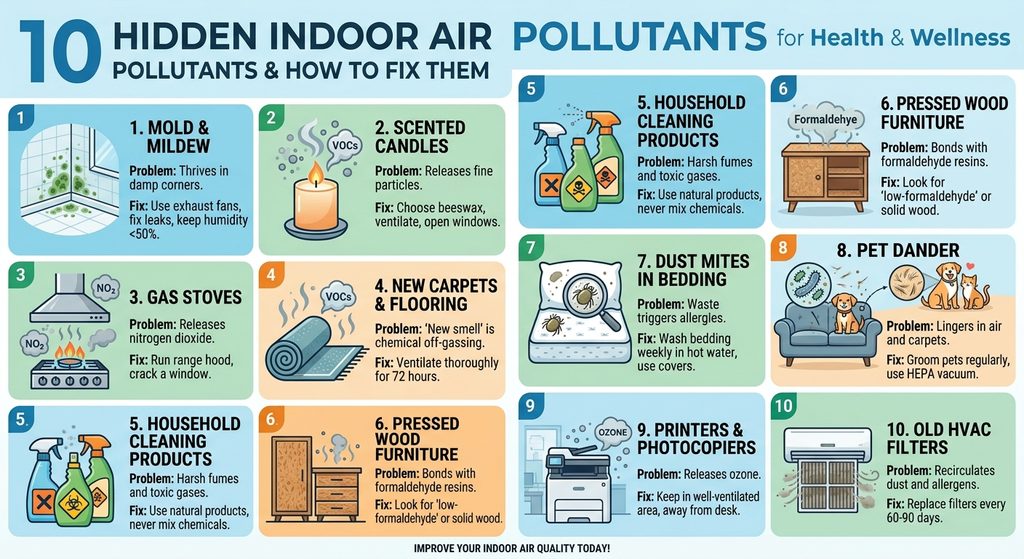
Show Image
5. Household Cleaning Products
Many all-purpose cleaners, disinfectants, and bleach-based products emit harsh chemical fumes. Mixing certain products (like bleach and ammonia) can even create toxic gases.
Fix: Switch to fragrance-free or natural cleaning products, and always ventilate while cleaning. Never mix chemical cleaners.
6. Furniture and Pressed Wood Products
Particleboard, plywood, and MDF furniture are often bonded with formaldehyde-based resins. This is especially common in budget furniture and cabinetry.
Fix: Look for furniture labeled “low-formaldehyde” or solid wood pieces, and let new furniture air out in a ventilated space before bringing it into your bedroom.
7. Dust Mites in Bedding and Upholstery
Invisible to the eye, dust mites thrive in mattresses, pillows, and soft furnishings. Their waste particles become airborne and are a leading trigger for indoor allergies.
Fix: Wash bedding weekly in hot water, use dust-mite-proof covers, and vacuum upholstery regularly with a HEPA-filter vacuum.
8. Pet Dander
Even in homes without visible pet hair, microscopic dander can linger in air ducts, carpets, and fabric for months.
Fix: Groom pets regularly, vacuum frequently, and consider an air purifier with a HEPA filter in shared living spaces.
9. Printers and Photocopiers
Home offices with laser printers can release ozone and fine particles, particularly in small, poorly ventilated rooms.
Fix: Keep printers in a well-ventilated area, away from where you sit for long hours.
10. Synthetic Air Duct Insulation and Old HVAC Filters
Old, clogged HVAC filters don’t just reduce airflow — they recirculate dust, mold spores, and allergens throughout your home every time the system runs.
Fix: Replace HVAC filters every 60–90 days, and schedule professional duct cleaning every few years.