For years, ADHD was widely viewed as a childhood condition—something people simply “grew out of.” We now know that’s not true. Thousands of adults are only discovering they have ADHD in their 50s, 60s, or even 70s.
For many, the realization comes after a child or grandchild is diagnosed. As they learn about ADHD symptoms, they begin recognizing the same lifelong struggles in themselves—difficulty staying organized, forgetting appointments, losing everyday items, or constantly feeling overwhelmed.
According to Johns Hopkins psychiatrist Dr. David Goodman, every adult diagnosed with ADHD after age 60 grew up without receiving a childhood diagnosis. That means many spent decades believing they were simply forgetful, lazy, or disorganized, when in reality, their brains were wired differently.
A late diagnosis often brings mixed emotions. There’s relief in finally understanding why everyday life has always felt harder than it seemed for everyone else. At the same time, many people experience grief for the years spent blaming themselves for something they couldn’t control.
The good news? Once you understand how ADHD affects your brain, you can begin designing your home to support it instead of working against it. Small, intentional changes can reduce stress, improve daily routines, and make life feel far more manageable.
Why Your Home Environment Matters
ADHD affects executive function—the brain’s ability to plan, organize, remember, prioritize, and complete tasks.
Many older adults unknowingly developed coping strategies throughout their working years. Daily routines, work schedules, and family responsibilities provided structure that helped compensate for ADHD symptoms.
However, retirement, becoming an empty nester, or losing a spouse often removes that built-in structure. Suddenly, missed appointments, forgotten medications, clutter, and unfinished tasks become much more noticeable.
Research from Harvard Health and CHADD suggests that creating an ADHD-friendly environment is one of the most effective non-medication strategies for improving everyday functioning.
Instead of relying solely on memory or willpower, your home can become a system that reminds, guides, and supports you.
Before Buying Anything: Follow These Four Principles
Before purchasing organizers or smart gadgets, focus on these foundational habits.
1. Keep Everyday Items Visible
For many people with ADHD, if something disappears behind a cabinet door, it often disappears from memory too.
Whenever possible:
- Use clear storage bins.
- Choose open shelving for frequently used items.
- Label containers clearly.
Visibility encourages consistency.
2. Give Every Item One Permanent Home
Your keys should always live in one place.
Your glasses should have one designated spot.
Your medications should never move from shelf to shelf.
The fewer decisions you make each day, the easier it becomes to build reliable habits.
3. Reduce the Number of Steps
Every extra step creates another opportunity for distraction.
If putting something away requires opening multiple drawers or moving several objects first, chances are it won’t happen consistently.
Make storage simple, obvious, and easy to access.
4. Design Around Your Real Habits
Don’t organize for the person you wish you were.
Organize for the person you are today.
If your mail always lands on the kitchen counter, place a labeled mail tray there instead of forcing yourself to carry it somewhere else.
Successful organization works with your habits—not against them.
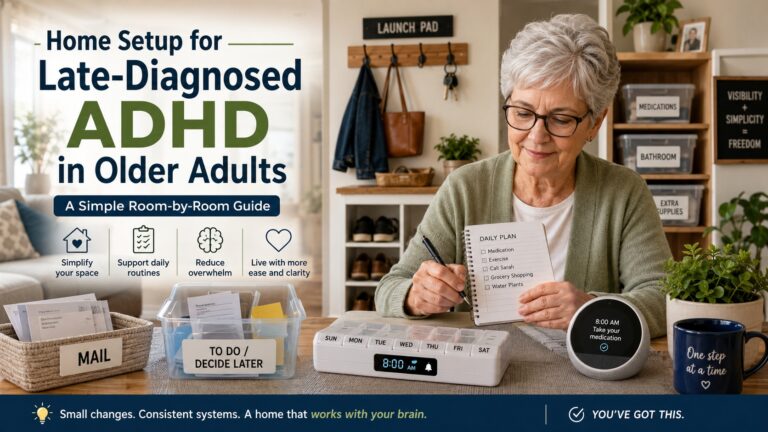
Entryway: Create a Daily “Launch Pad”
Your entryway sets the tone for the entire day.
Include:
- Wall hooks for keys, jackets, and bags
- A shallow tray for your wallet, glasses, and phone
- A labeled basket for incoming mail
- A grabber tool near the door to reduce bending and lower fall risk
A consistent launch pad means less frantic searching before leaving the house.
Kitchen: Reduce Decision Fatigue
The kitchen should make everyday tasks easier—not more overwhelming.
Helpful ideas include:
- Clear, labeled pantry containers
- Transparent refrigerator bins to keep food visible
- A dedicated tray for daily medications (stored separately from food)
- A simple kitchen timer or smart speaker for cooking and reminders
Breaking tasks into short, timed sessions makes chores feel less overwhelming.
Bathroom: Build a Reliable Medication Station
For older adults, medication management is one of the most important reasons to create an ADHD-friendly space.
Consider using:
- Pill organizers with built-in alarms
- Voice assistants such as Amazon Alexa or Google Home for medication reminders
- A two-tier organizer that holds toiletries in the exact order you use them
A visual routine reduces the chances of skipping important medications or daily hygiene tasks.
Living Room: Keep Paperwork Under Control
Paper clutter can quickly become overwhelming.
Instead of creating complicated filing systems, keep things simple.
Helpful strategies include:
- A “Decide Later” box for papers that require future attention
- Broad folders labeled “Medical,” “Insurance,” “Bills,” or “Taxes”
- A designated “Doom Box” for miscellaneous items that don’t yet have a permanent home
Containing clutter is often more realistic—and more sustainable—than trying to eliminate it entirely.
Smart Home Tools That Can Make Life Easier
Technology can reduce the mental effort required to remember everyday tasks.
Useful options include:
- Smartwatches with vibration reminders
- Smartphone medication and appointment alerts
- Smart speakers for verbal reminders
- Video doorbells with two-way communication
- Smart plugs and smart bulbs that automate lighting
The goal isn’t to depend on technology—it’s to let technology handle the remembering so your brain doesn’t have to.
When Home Organization Isn’t Enough
While an ADHD-friendly home can dramatically improve daily life, it isn’t a complete solution.
If you continue struggling with focus, memory, organization, or emotional regulation, consider speaking with a healthcare professional who specializes in adult ADHD.
Many older adults—especially women—are still misdiagnosed or overlooked because ADHD symptoms can resemble normal aging or mild cognitive impairment.
The encouraging news is that ADHD can be diagnosed at any age. A formal diagnosis may open the door to effective treatment options, including medication, therapy, and ADHD coaching, which often work even better when paired with supportive home systems.
Final Thoughts
Receiving an ADHD diagnosis later in life isn’t a sign of failure—it’s an explanation for challenges you’ve likely faced for decades.
Your brain isn’t broken; it simply processes the world differently.
A home designed around visibility, simplicity, and consistent routines can reduce daily stress, improve independence, and help you regain a sense of control.
Don’t feel pressured to change everything at once.
Start with one room.
Choose one or two strategies.
Build from there.
Small changes, repeated consistently, can make a remarkable difference over time.


Nice perspective on the topic. You may find Luna Lisa Alpha useful — . Luna Lisa Alpha